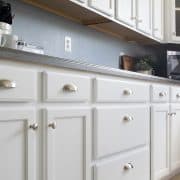
How To Spray Paint Kitchen Cabinets
Get professional results painting your kitchen cabinets with a paint sprayer with this tutorial that gives all my tips and tricks from a professional painter.
Yield: 1 kitchen
Cost: $350-500
Materials
- TSP or Degreaser
- Sand paper
- Sanding Blocks
- Wood Filler Only for imperfections or filling old hardware
- Deglosser only if not sanding
- Paint Brushes
- Lint-free Microfiber rollers
- Paint trays
- Stainblocking Primer
- Paint
- Protective Top Coat
Instructions
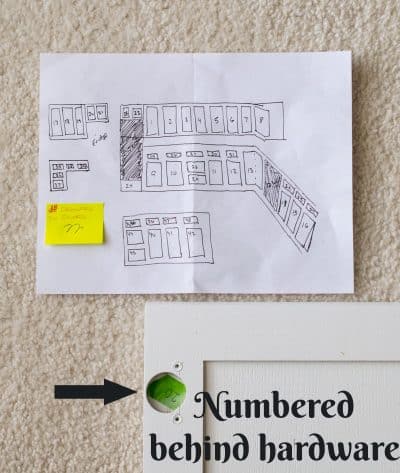
- Remove Doors and drawers. Unscrew hardware. Especially for a large kitchen with multiple size doors and drawers, I HIGHLY recommend numbering them and making a chart.
- Prep the cabinets by clean with teaspoon or degreaser cleaner if you have grease or oil stains. Repair scratches with wood filler.
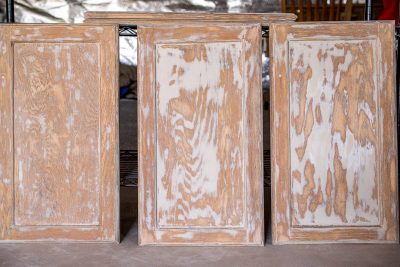
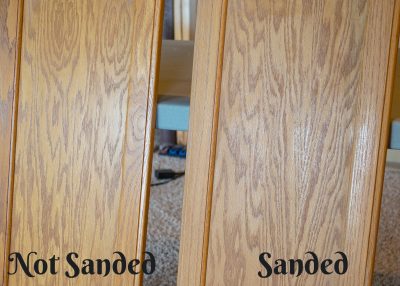
- Sand any glossy varnish or coating off. You do not need to sand every bit of previous stain or paint off if it is in good condition. Roughing up the surface creates a better paint bond, hands down. Use an orbital sander with 120 grit to make this much easier on your hands. Vacuum and wipe all dust off of the panels before priming.
- Setup your sprayer and work area. Cabinet doors should be dried off the ground (solo cups or wood blocks work well). For doors, start with the back sides. Prime, paint, and and allow the doors to dry before flipping over to prime, paint, and dry the door fronts.
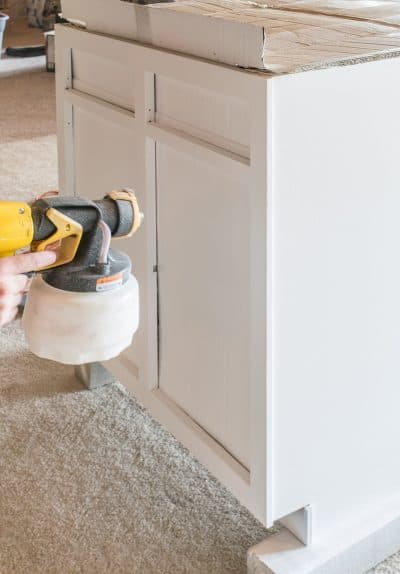
- Prime the cabinets with a quality primer. The Kilz Premium (not original) is my no-fail primer for cabinets. For very light colors, use 2 coats of primer. Allow to dry 24 hours.
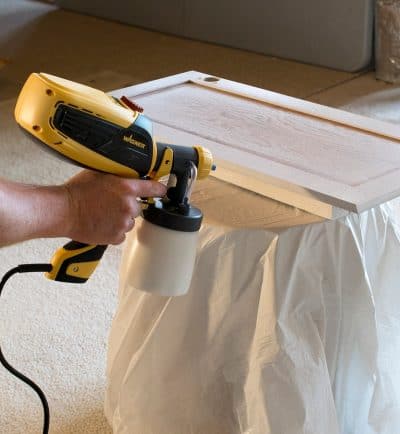
- Paint the cabinet doors with 2 coats of cabinet paint. See notes about using a sprayer.
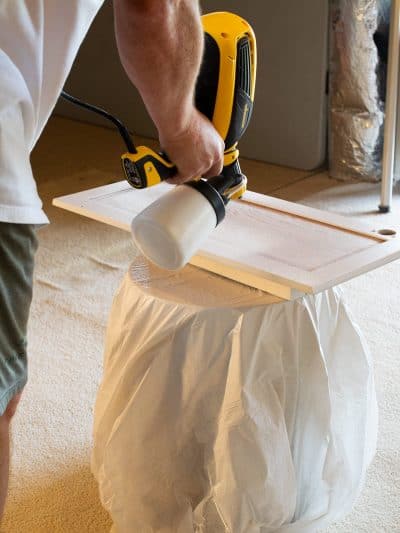
- Allow to dry. I generally allow the doors to dry about a week before flipping over to prime and paint the fronts.
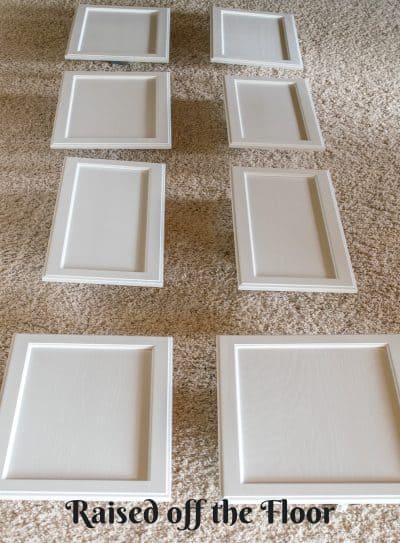
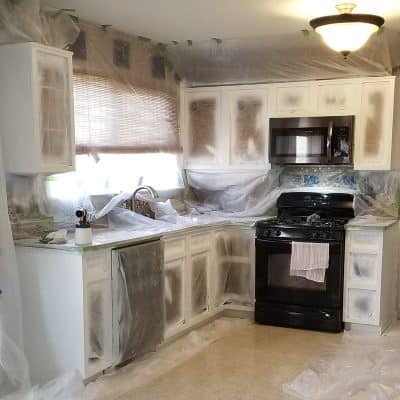
- Paint the frames. You can tarp and spray the cabinet frames while waiting for the doors to dry. You can either tarp and spray the cabinet frames (pictured) or paint using a brush and roller. Generally, there is no need to paint the insides except for glass fronted cabinets.
Notes
Tips for using a sprayer
- Wipe the tip with a rag occasionally as you go. Dried paint can build up on it, causing your paint to splatter.
- Always test a scrap board (preferred) or large piece of cardboard. Anytime you take a break from using the sprayer, always hit the test board first. This includes after refills or long breaks.
- If after the first few cleanings, your paint sprayer won’t spray, check to make sure a pinhole at the top of the suction tube isn’t clogged.
- Start by spraying off the board, meaning engage the sprayer before you are over top of the work product (or cabinet door in this case). Spray all the way across, and let go of the trigger after you have gone off the door. If a sprayer is going to spatter, it will most likely happen when you engage/disengage the trigger.
- If you get spatter/orange peel, wipe off immediately until smooth and spray again. Drying and sanding smooth again is much more time-consuming,
- Clean the sprayer immediately after use. You can, however let it sit in the sprayer overnight for additional coats, but clean the tip well.
