
Discover the secrets to achieving professional-grade results by painting kitchen cabinets with a sprayer. Learn expert tips, step-by-step instructions, and insider techniques to say goodbye to dated cabinets and hello to long lasting, smooth, and beautiful cabinets.
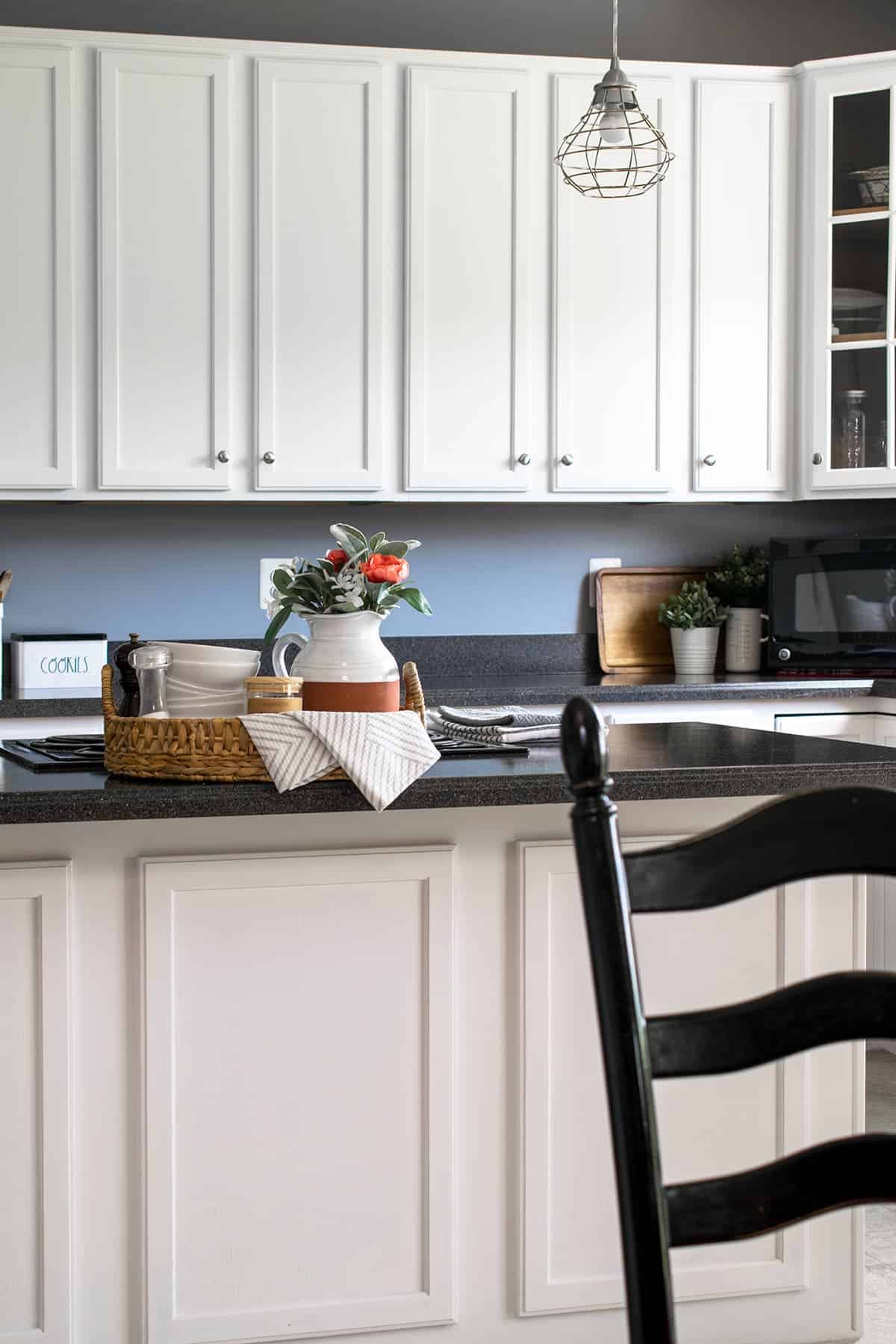
I have been receiving a lot of questions lately about cabinets and I am painting a large set of kitchen cabinets for a client. I’ve lost count of how many sets of painted cabinets we have painted, so I thought this would be a great way to talk through the process of using a paint sprayer for cabinets.
This house is being sold and the owner is completing a few budget updates to get ready. She was a bit overwhelmed with such a large kitchen, so I helped guide her on the best products, finishes, and processes for making these cabinets shine.
Looking for some color inspiration for your project? I have scoured the internet to find specific examples and real-life paint examples in our post on Colorful Furniture Makeovers, 20 Sage Green Cabinet Paints, and the best Blue Cabinet Paint Colors.
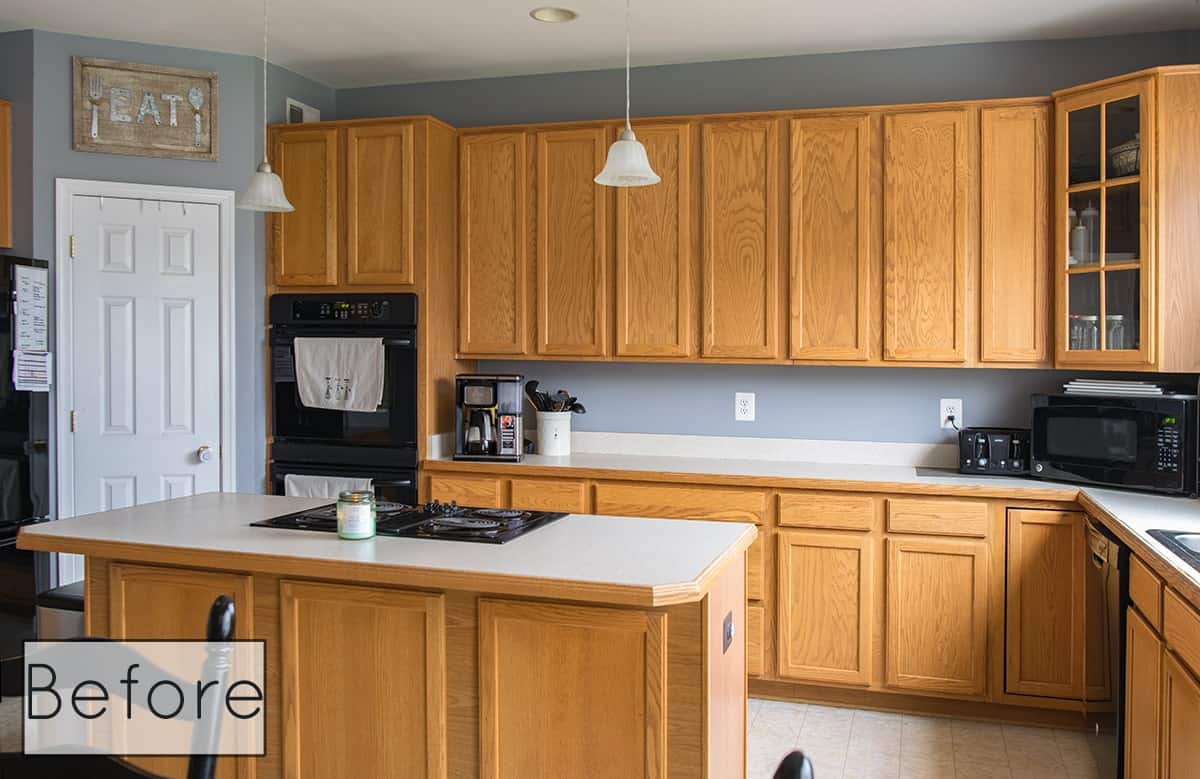
Here is the before:
Why You Need A Paint Sprayer
Painting kitchen cabinets is a HUGE job. I wouldn’t dream of hand-painting cabinets with a brush and roller. Here is why I recommend a sprayer:
1. It’s a Time Saver
Painting kitchen cabinets is a big job, even if you don’t have a huge kitchen. For this kitchen, even with 47 doors and drawers, one coat of paint took 2 hours! A brush would have required 8-10 hours per coat. A good paint sprayer is a lifesaver for large projects!
2. No Brush Marks
Nothing beats the easy-to-get smoothness of a sprayer. Period. The finish will look professionally done.
3. Less Paint Needed
A paint sprayer applies paint in very thin coats, much thinner than a typical brush. Therefore, even with the same number of coats, you get even coverage but use less paint.
*Note: We have a step-by-step printable guide to painting kitchen cabinets at the very bottom of this post. You can click jump to tutorial at the top of this post or read on for all our tips expert advice.
How to Prep for Painting
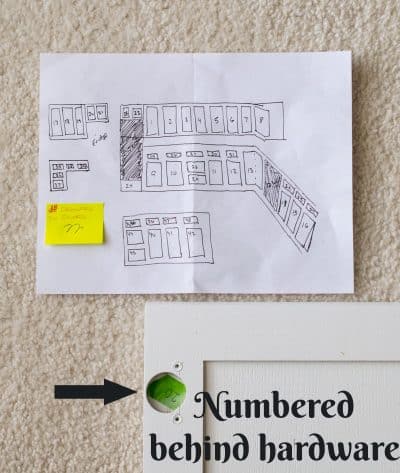
Especially for a large kitchen with multiple-sized doors and drawers, I HIGHLY recommend numbering them and making a chart. It will make it so much easier on you when you need to put everything back together.
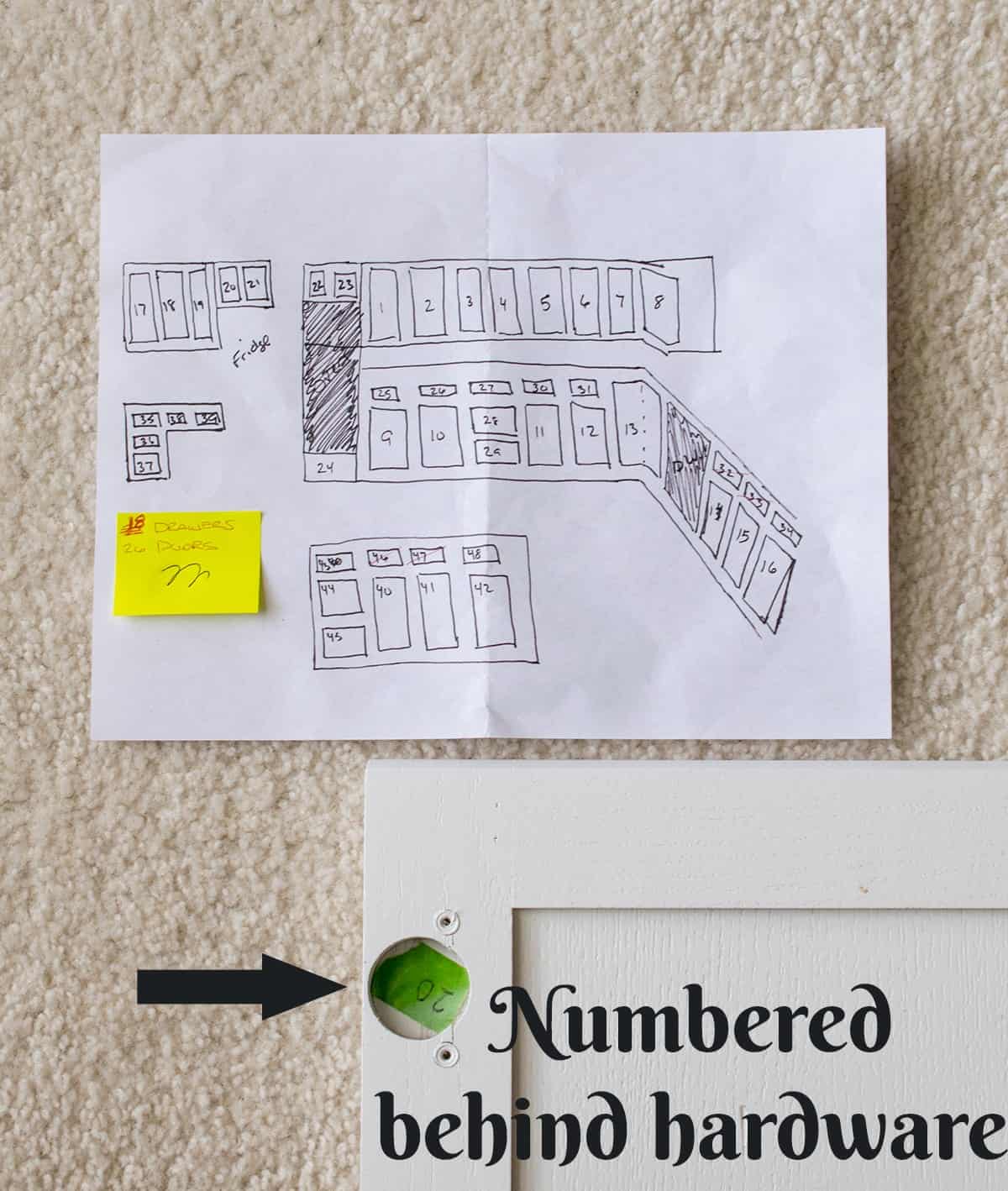
As you can see, we used painter’s tape and put the tape in an inconspicuous place behind the hardware that we removed. We did the backsides first with the tape on the front, and then moved it to the back to paint the fronts.
With painting anything in the home, the basic steps remain the same – Clean with TSP, sand, wipe thoroughly to remove dust, prime, and paint.
With that being said, there are two questions I get asked ALL the time.
“Do I need to sand cabinets before painting?”
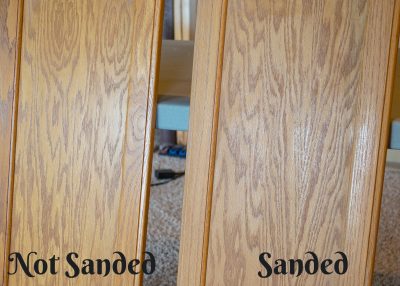
While many paints out there tout themselves as “no sanding required”, I still HIGHLY recommend sanding. Sanding helps paint bond and kitchen cabinets are very high-traffic pieces.
The worst feeling is to do all that work, and then realize the paint is chipping/peeling because you skipped this step. It just isn’t worth it.
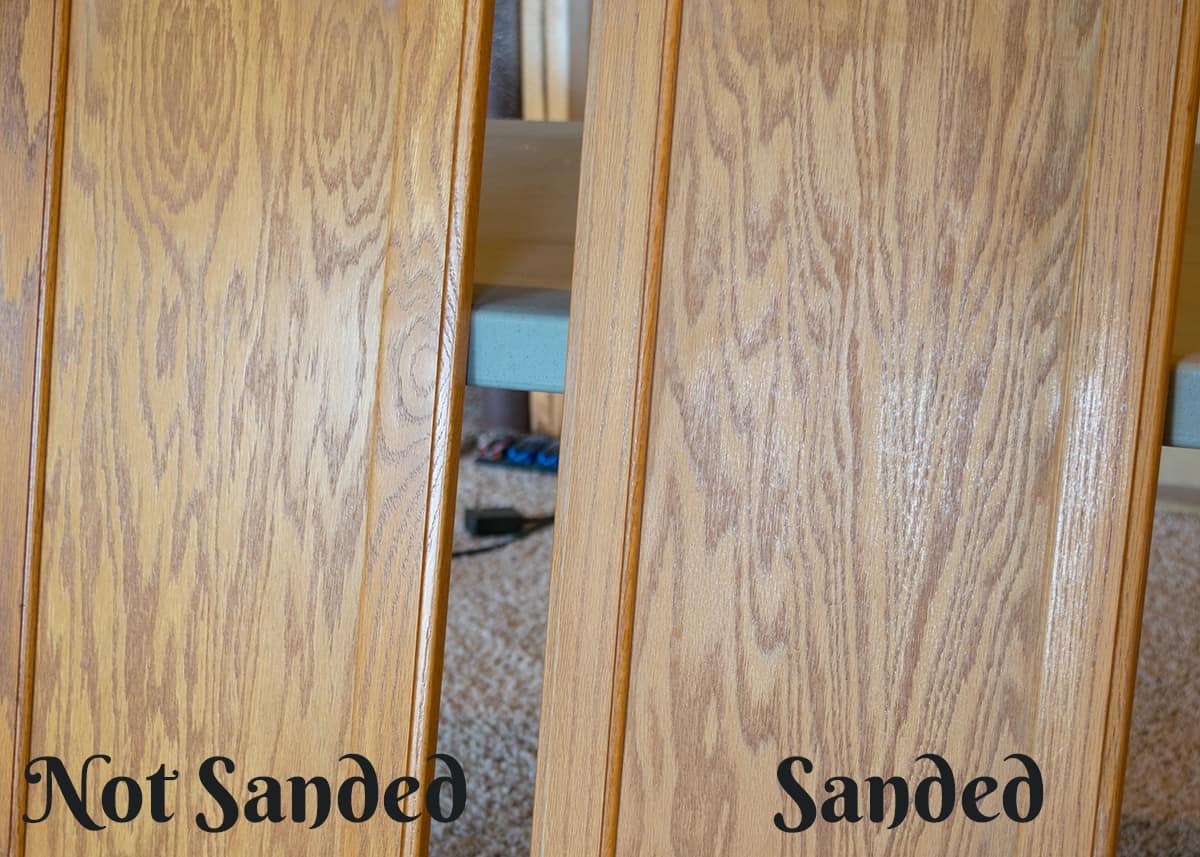
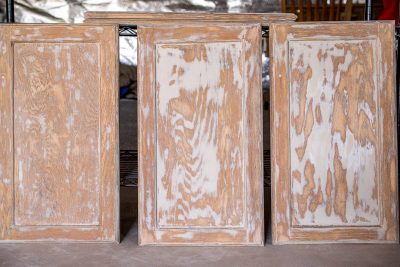
The good news is you do NOT need to sand down to bare wood. A good rough-up with 120-grit sandpaper will do for most cabinet paints. Sand in the direction of the grain or use an orbital sander and mouse sander. These two tools will almost eliminate hand sanding while making the process much faster and easier.
To get a truly smooth, professional finish, sand with 220-grit sandpaper just before the last coat of paint.
Tips for Setting Up
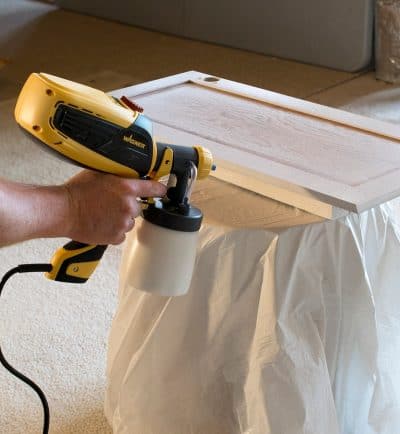
Fun fact – I own 4 sprayers! For this cabinet set, we used the Wagner 3000 sprayer. This sprayer comes with two nozzles – one for finer, detailed work like cabinets and one for larger projects like staining a fence or painting walls.
Read More>>>> Our thoroughly tested guide to Best Paint Sprayers for Your Project!
- Familiarize yourself with the sprayer you’re using, whether it’s an airless, HVLP, or a compressed air sprayer. Each has its own setup and operation.
- Paint dust gets everywhere! Close doors, lay down drop cloths and cover sensitive items with plastic sheeting. I turn off the air conditioning inside while spraying even.
- Choose a spray tip size based on the type of paint you’re using and texture. Smaller tips are better for fine finishes like cabinets where you need more control.
- Test spray a scrap board (preferred) or large piece of cardboard. Anytime you take a break from using the sprayer, always hit the test board first. This includes after refills or long breaks.
- If your paint sprayer won't spray, and you have cleaned it, check to make sure the small pinhole at the top of the suction tube is not clogged.
- Clean the sprayer immediately after use. This ensures continued quality and is all the maintenance you need. Inspect for any damage or signs of wear as well.
- Wear appropriate personal protective equipment, including goggles, a respirator mask, to protect yourself from paint fumes and overspray. Yes, I have to say it.
- You can leave the paint in the sprayer between coats. I clean and wrap the nozzle in tight fitting plastic to avoid air from drying any paint. Some sprayers can’t do this though.
- Paint in a well-ventilated area between 40 and 80 degrees and low humidity (under 70%) for the best spraying conditions.
- Adjust the spray fan width. Narrower widths are suitable for detail work, while wider widths are better for large areas.
- Determine the most efficient spraying direction for your project. This refers to the nozzle. A vertical nozzle on a air-powered sprayer has a different fan pattern than a horizontal nozzle.
How To Set Up the Sprayer and Work Area
On this particular sprayer, and most Wagner sprayers, the larger tip has three knobs to adjust: the airflow, the paint flow, and the paint width. The detail nozzle only has the airflow regulator.
Both sizes have the option to spray vertically or horizontally. Use the fine finish tip/canister (sometimes called the furniture gun) if your sprayer has multiple sizes.
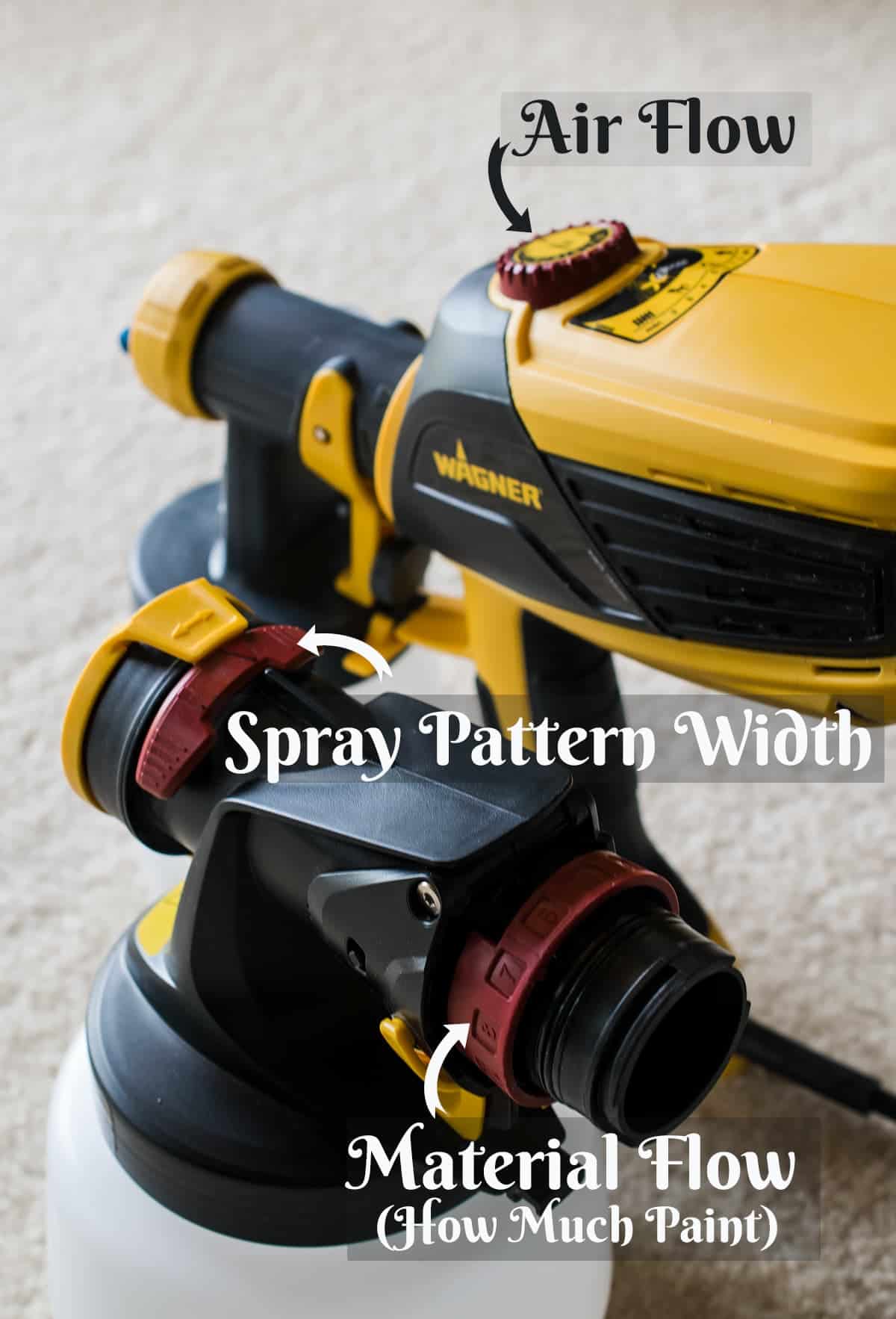
Although this sprayer can handle most paints un-thinned, if you find that you just aren’t getting a super smooth finish or the sprayer is spitting, try thinning the paint with up to 10% water. I usually add ¼ a cup at a time and mix thoroughly to test.
*Note – Before adding water, ask the paint rep. A few paints, such as Benjamin Moore Advance, can be negatively impacted by adding water.
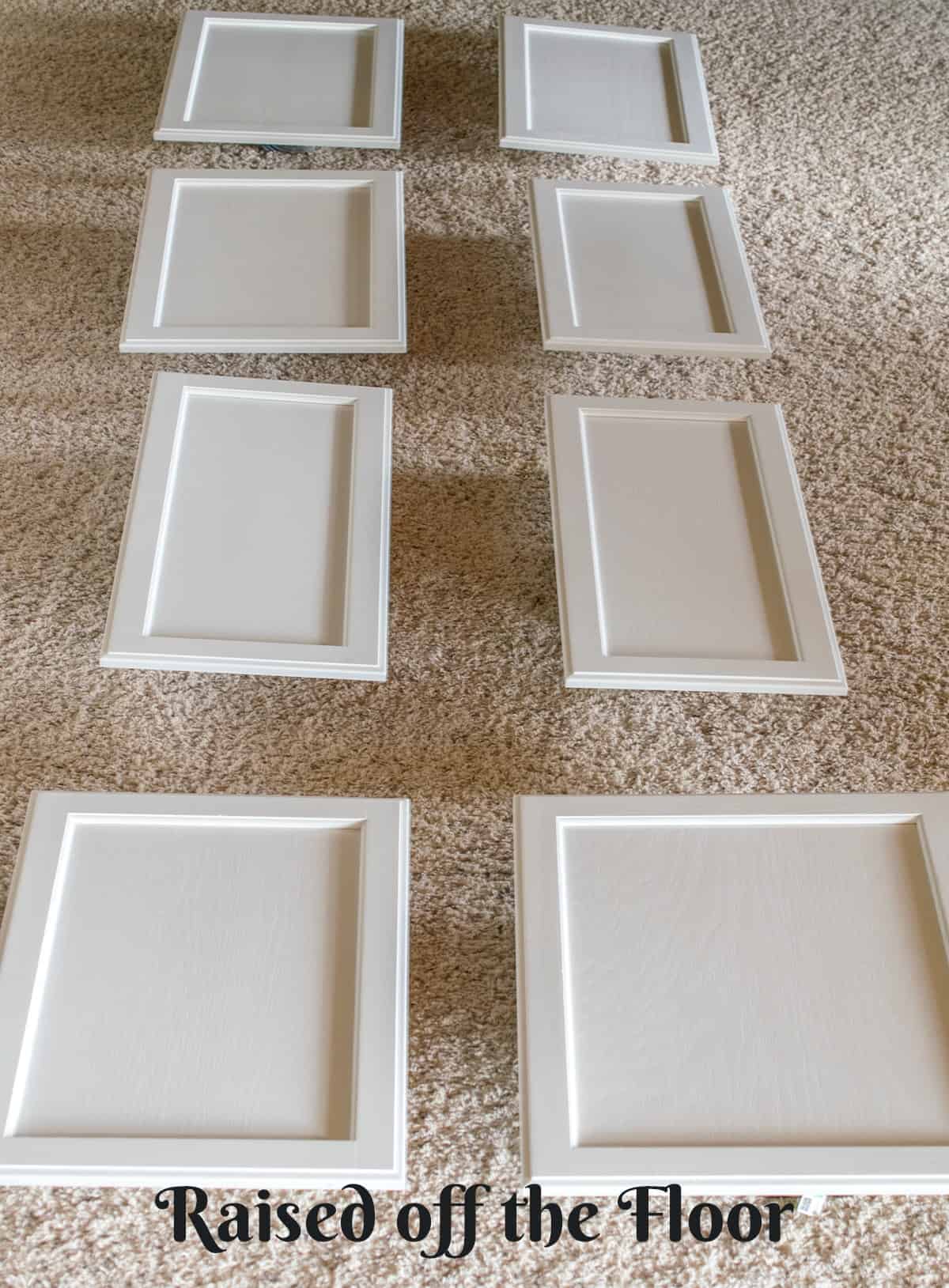
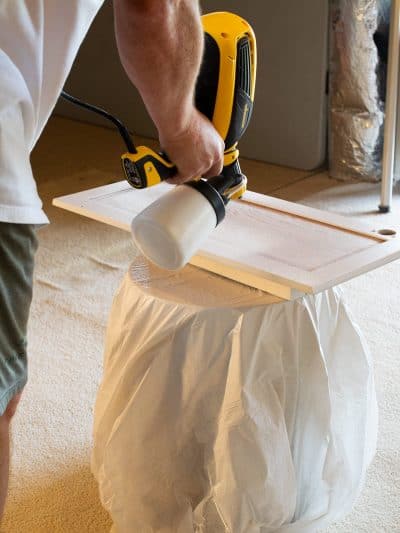
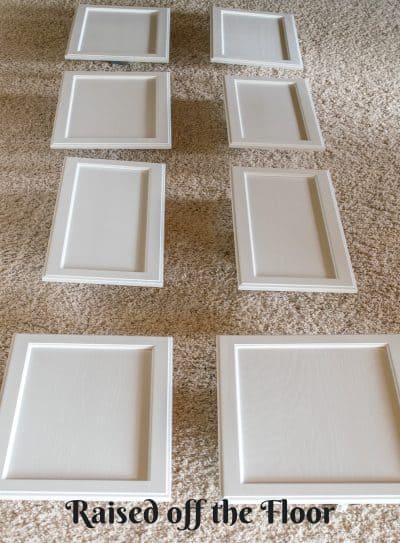
The doors and drawer fronts should ideally sit raised off the floor to keep the wet sides from touching anything while drying. We used scrap pieces of 4×4, but a pack of plastic solo cups is cheap and works great!
Start with the backside of the doors. When painting both the inside and outside of the doors, paint one side, let them sit for a week+ to partially cure, and then do the other side.
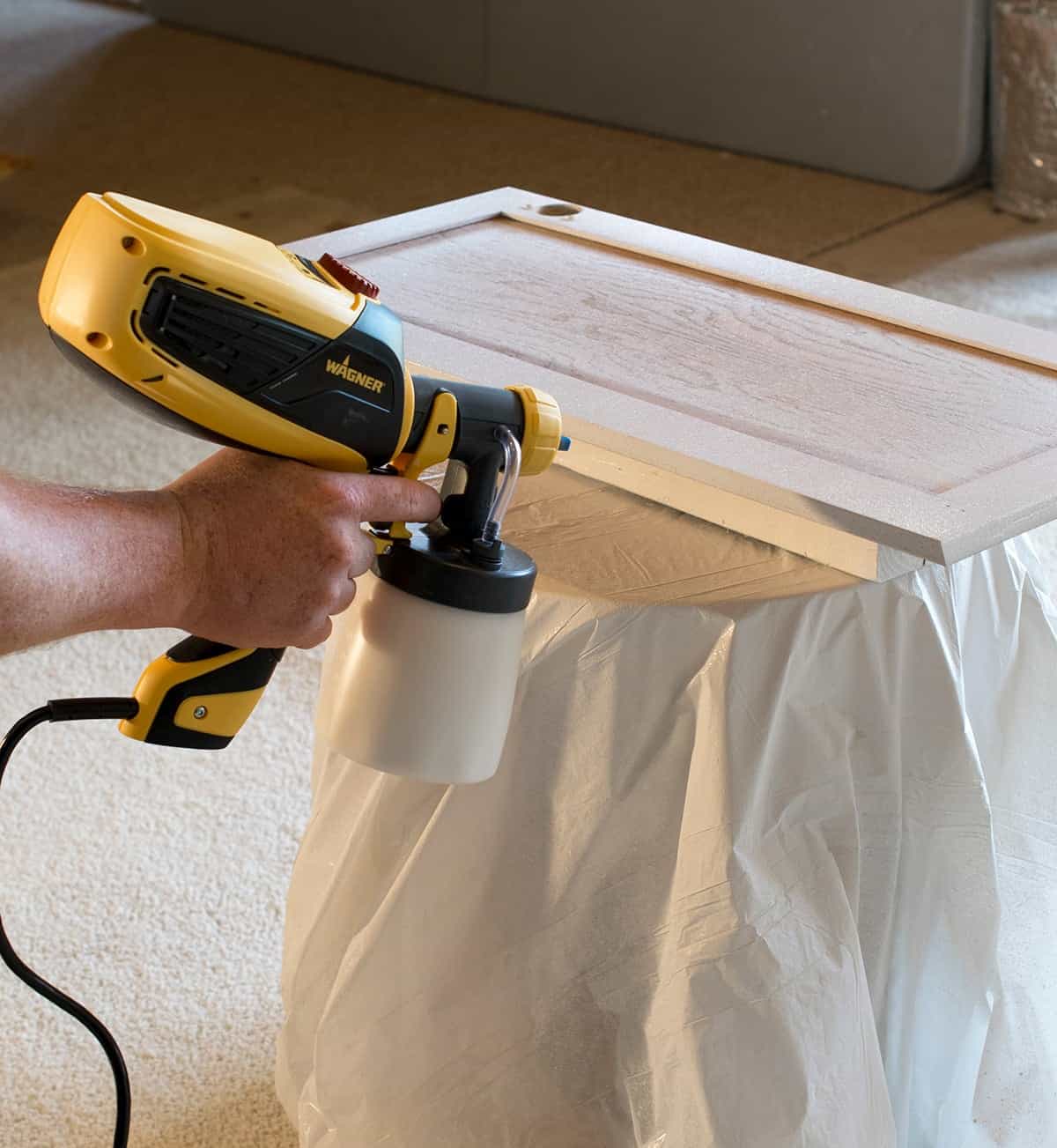
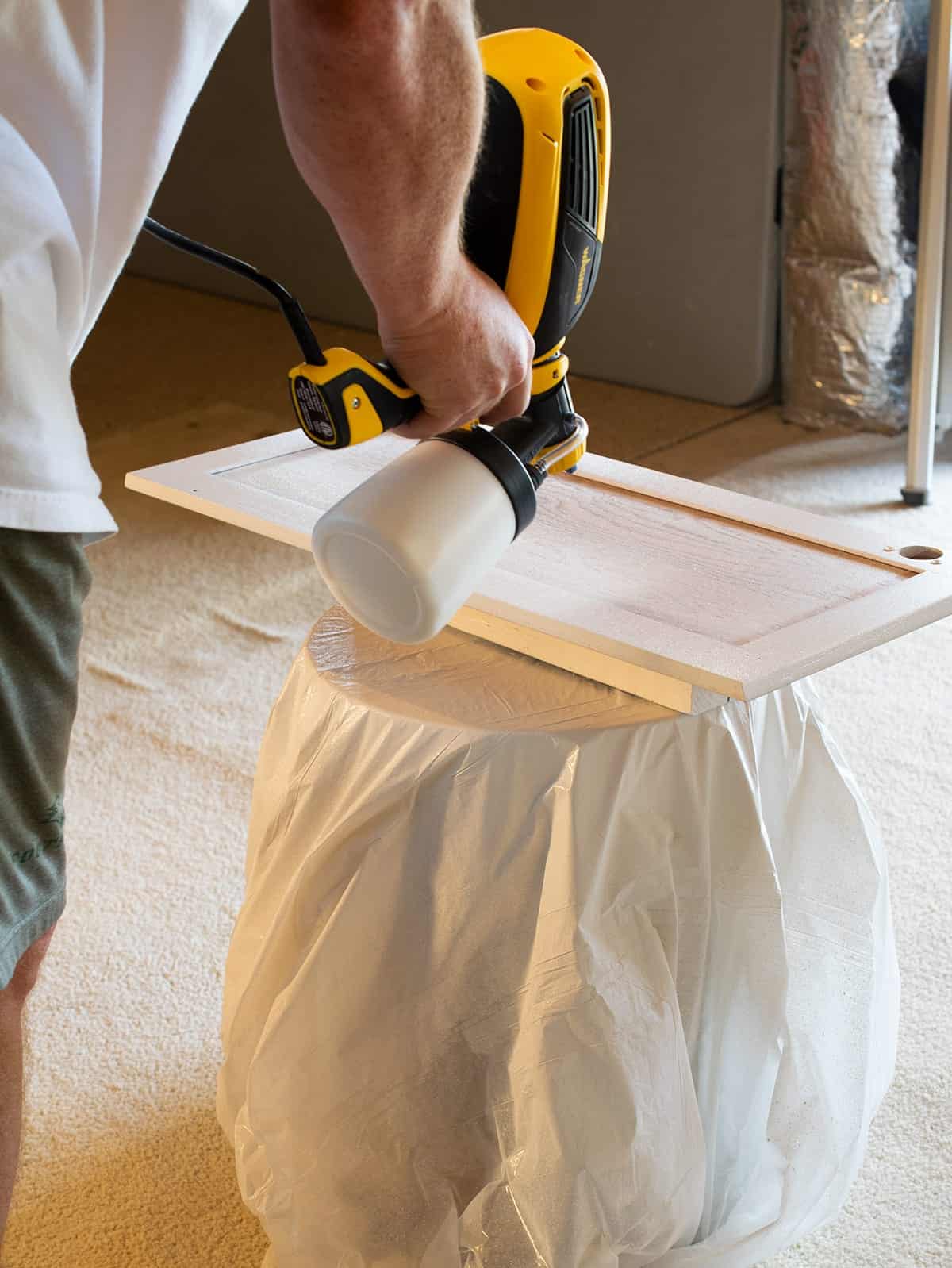
Spray your doors and drawer fronts off the ground. We used an old table and covered it with plastic to raise what we sprayed off the ground. I carefully moved the “done” pieces to their drying place. Each coat took about 2 hours, so our backs thanked us for not having to bend over.
Expert Tips for Painting with a Sprayer
Beyond the setup, using the sprayer is as easy as it gets. Just point and shoot! However, there are a few quick tips to make the process go smoothly:
- Wipe the tip with a rag occasionally as you go. Dried paint can build up on it, causing your paint to splatter.
- Start by spraying off the board, meaning engage the sprayer before you are over the top of the work product (or cabinet door in this case). Spray all the way across and let go of the trigger after you have gone off the door. If a sprayer is going to spatter, it will most likely happen when you engage/disengage the trigger.
- If you get spatter/orange peel, wipe off immediately until smooth and spray again. (A lesson I learned the hard way when I started out.) Sanding it all smooth again is much more time-consuming both to fixing the mistake and to project completion.
- Go slow enough for full coverage. Maintain a consistent speed and distance to achieve an even coat.
- You do NOT need to sand between coats. For the absolute best finish, sometimes I sand just before the last coat but not usually.
- Hold the paint sprayer gun about 10-12 inches away from the surface and begin spraying in smooth, overlapping strokes. Varying the distance can result in uneven coverage and overspray.
- Spray lengthwise, where possible. I find that the best way to spray cabinet doors is bottom to top of cabinet doors and left to right on drawer fronts because you are spraying in the direction of short side to short side. It produces less paint flashing or streaking and wastes less paint.
Check out our other post for more information on painting cabinets:
- How To Hide Wood Grain in Painted Cabinets
- Painting Cabinets like a Pro
- The Best Paints for Furniture
- What to Know Before Painting Kitchen Cabinets Black
- How to Protect Painted Surfaces with a Top Coat
I know that this sounds in-depth, but I promise after you get the hang of it, you may find yourself using a paint sprayer for all kinds of projects around the house. It really is addicting!
Quick Answers to Questions
Only use a paint durable enough for cabinets and furniture. My never-fail paints include Benjamin Moore Advance and Fusion Mineral. Other paints I have used successfully include Sherwin Williams Emerald Line, Behr Cabinet and Trim Paint, and Rustoleum Cabinet Transformations. For long-lasting results, add a protective topcoat.
There are some situations where you can technically skip sanding, although it is discouraged because kitchen cabinets are a very high-traffic surface. Sanding ALWAYS gives the best paint bond to reduce cracking, peeling, and removing the paint through scratches or dings.
I have written a great guide to the best paint sprayers for your project that will lead you to the right one for you. The answer isn’t the same for everyone.
I highly recommend a topcoat for kitchen cabinets, even if the paint says it doesn’t need one. Polycrylic (sometimes called Water-based polyurethane) will make them much more durable and easier to clean things like dried food without harming the paint finish. You can read more about my favorite polycrylics here.
The third question is about filling in the grain. If you are interested in that, you can find a wealth of information about hiding wood grain here. However, removing wood grain wasn't a request in this cabinet project.
A number of things can cause the orange peel effect or bubbling on the surface of your cabinets. Any excess moisture or working in overly hot or humid conditions can cause bubbling. Spraying too closely to the cabinet surface or not moving quickly enough can cause paint to accumulate and create unwanted texture.
Our Project Results
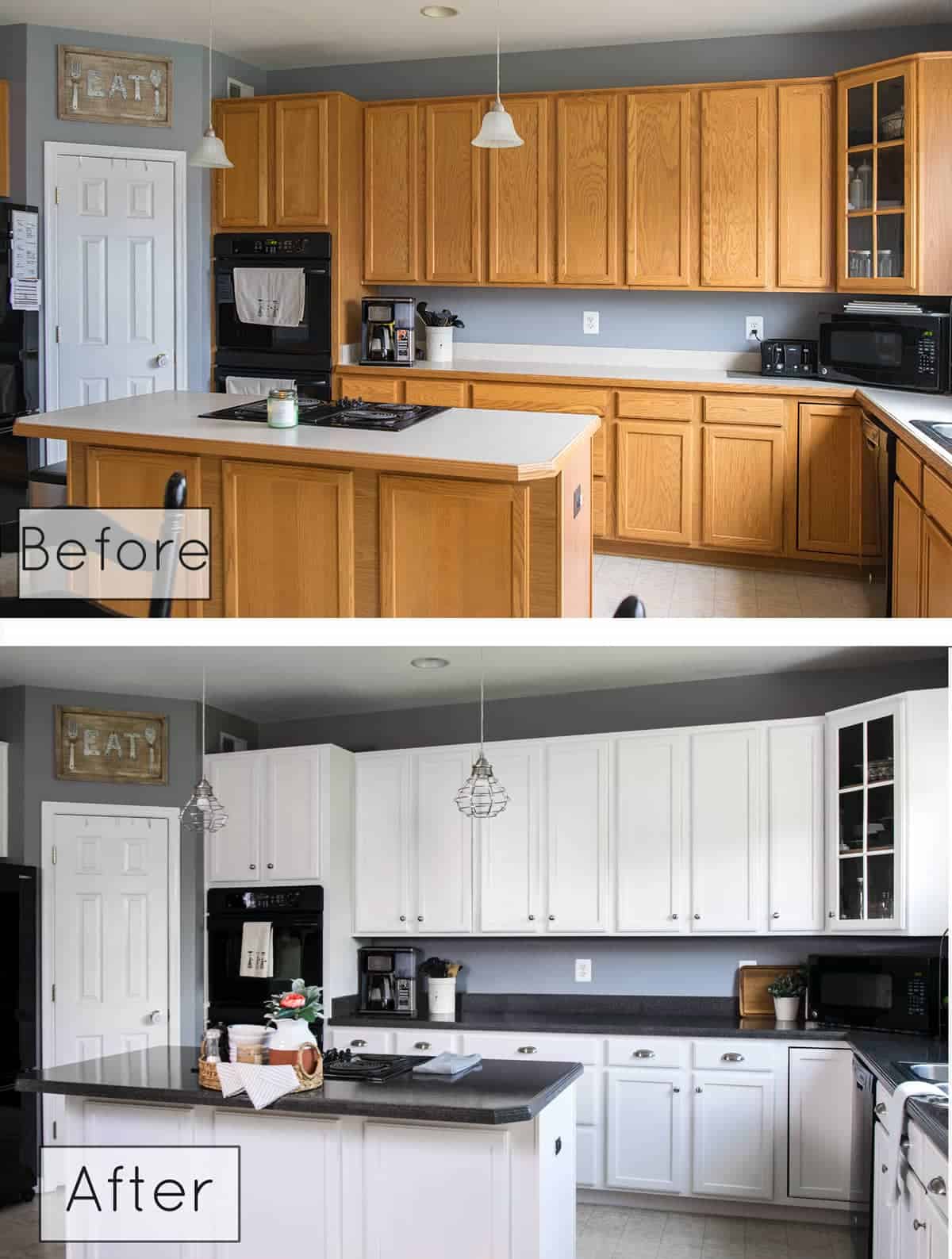
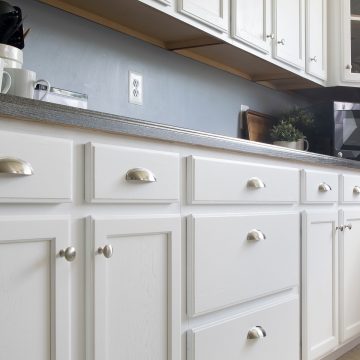
And my friend is absolutely thrilled with her updated cabinets. In fact, it even spurred her to epoxy her countertops, replace the light fixtures and add knobs. She wishes she had done this years ago!
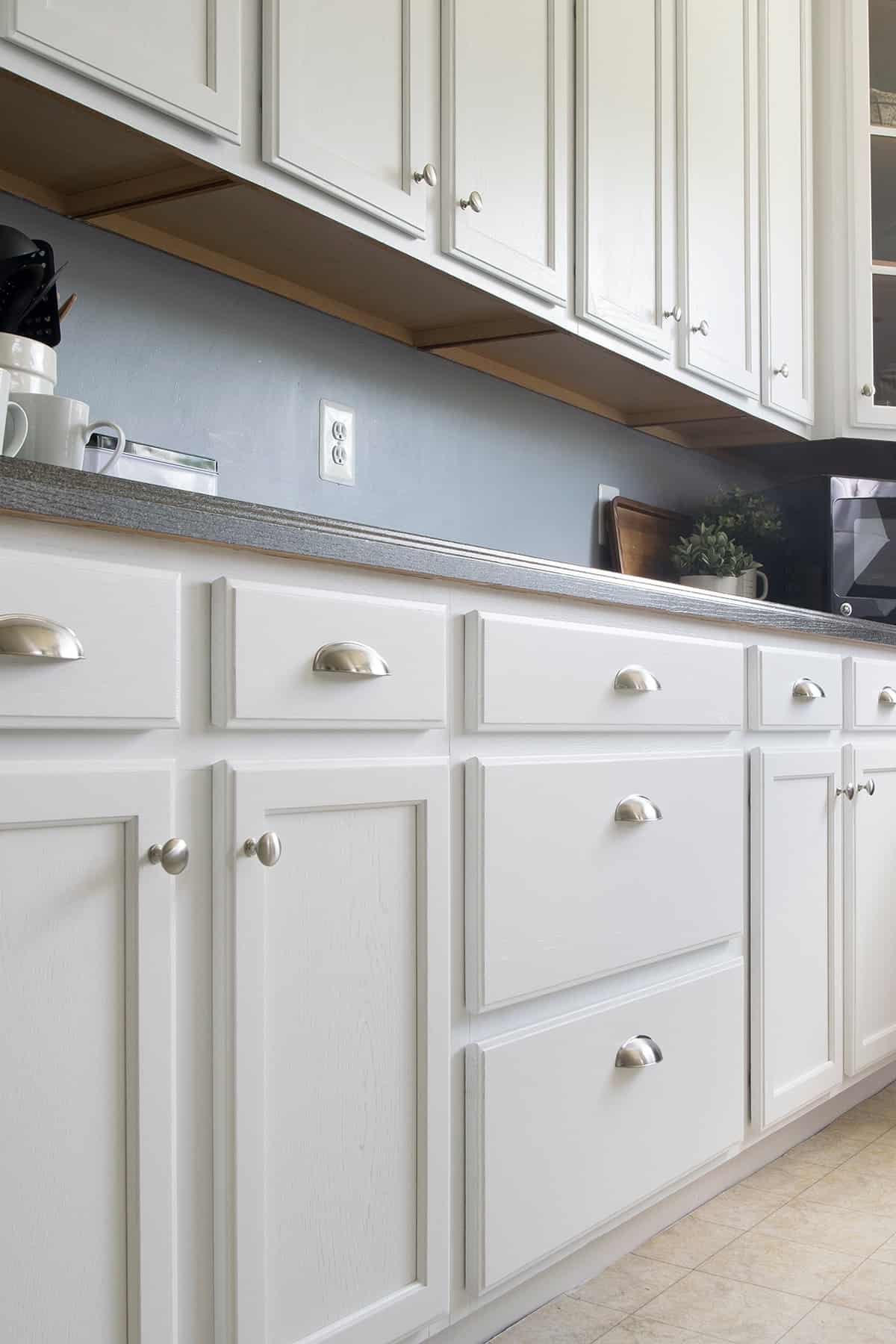
Even though we did not fill in the wood grain, the cabinets look so smooth and professionally done.
Grab our free series "Weekend Home Projects that will Transform Your Life" Sign up below to receive updates including free printables, organization tips, home improvement projects, recipes and more! |
More Home Improvement Projects
PS I love seeing your creations! Be sure to take a photo and tag #cravingcreative on Instagram! You can also stay in touch with me through following me on Instagram, Pinterest, and subscribing to the newsletter!
How To Spray Paint Kitchen Cabinets
Supplies
- TSP or Degreaser
- Sand paper
- Sanding Blocks
- Wood Filler Only for imperfections or filling old hardware
- Deglosser only if not sanding
- Paint Brushes
- Lint-free Microfiber rollers
- Paint trays
- Stainblocking Primer
- Paint
- Protective Top Coat
Instructions
- Remove Doors and drawers. Unscrew hardware. Especially for a large kitchen with multiple size doors and drawers, I HIGHLY recommend numbering them and making a chart.

- Prep the cabinets by clean with teaspoon or degreaser cleaner if you have grease or oil stains. Repair scratches with wood filler.

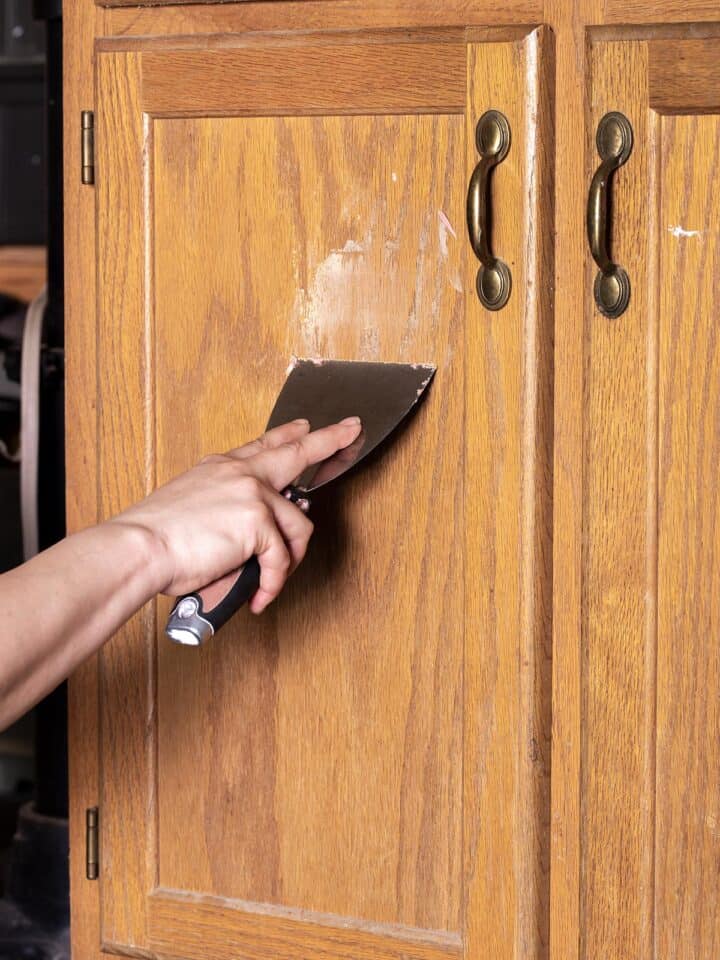
- Sand any glossy varnish or coating off. You do not need to sand every bit of previous stain or paint off if it is in good condition. Roughing up the surface creates a better paint bond, hands down. Use an orbital sander with 120 grit to make this much easier on your hands. Vacuum and wipe all dust off of the panels before priming.

- Setup your sprayer and work area. Cabinet doors should be dried off the ground (solo cups or wood blocks work well). For doors, start with the back sides. Prime, paint, and and allow the doors to dry before flipping over to prime, paint, and dry the door fronts.

- Prime the cabinets with a quality primer. The Kilz Premium (not original) is my no-fail primer for cabinets. For very light colors, use 2 coats of primer. Allow to dry 24 hours.

- Paint the cabinet doors with 2 coats of cabinet paint. See notes about using a sprayer.

- Allow to dry. I generally allow the doors to dry about a week before flipping over to prime and paint the fronts.

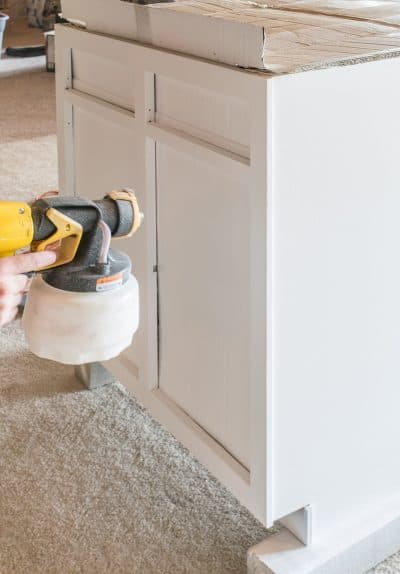
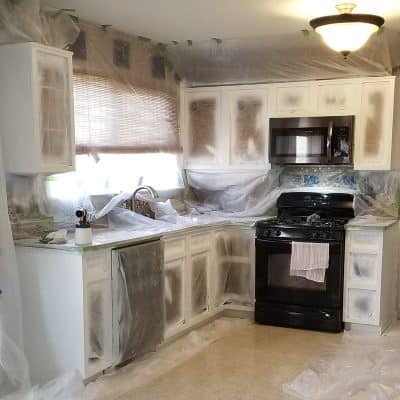
- Paint the frames. You can tarp and spray the cabinet frames while waiting for the doors to dry. You can either tarp and spray the cabinet frames (pictured) or paint using a brush and roller. Generally, there is no need to paint the insides except for glass fronted cabinets.

Notes
- Wipe the tip with a rag occasionally as you go. Dried paint can build up on it, causing your paint to splatter.
- Always test a scrap board (preferred) or large piece of cardboard. Anytime you take a break from using the sprayer, always hit the test board first. This includes after refills or long breaks.
- If after the first few cleanings, your paint sprayer won't spray, check to make sure a pinhole at the top of the suction tube isn't clogged.
- Start by spraying off the board, meaning engage the sprayer before you are over top of the work product (or cabinet door in this case). Spray all the way across, and let go of the trigger after you have gone off the door. If a sprayer is going to spatter, it will most likely happen when you engage/disengage the trigger.
- If you get spatter/orange peel, wipe off immediately until smooth and spray again. Drying and sanding smooth again is much more time-consuming,
- Clean the sprayer immediately after use. You can, however let it sit in the sprayer overnight for additional coats, but clean the tip well.
Kathryn Purinton says
I have read at least 50 articles on how to do this project. This article is the ONLY one I needed to read. Excellent!!!!
Alex says
This is awesome! I love the fact that you added on several FAQs after all of your steps and tricks. I’ve been looking for some good suggestions when it comes to kitchen cabinet painting, but feel like I always have more questions after I’m done reading different blogs. This is so helpful! Thank you for sharing!
Grace says
I’m new to paint sprayers and am using the Flexio 5000 to paint new built in cabinets we made. Have had some issues getting the settings right. Might lightly sand between coats just to make it smoother. Using Porter Paint Manor House in satin. Should I put some kind of top coat on top of that?
Rachel says
I don’t have a PPG store anywhere near me personally, so I am not familiar with their lines of paint. Their store rep might be the best to ask. That being said, it generally depends on how much you use these cabinets and how often they need to be cleaned. Dirt will show more often on light colors and dust is a pain on black. A topcoat will protect the integrity of the paint if you, for example, have to clean dried food spills often. (My son chronically cannot eat food over a plate, lol). For the paint sprayer, the settings can be tricky. For that particular sprayer, I often find myself maxxing out the air power setting to get it as fine as possible, but the thickness of the paint makes a difference there.