
Furniture today is rarely entirely solid wood although most every tutorial shows how to paint wood furniture. Unlock the secrets to identifying real wood vs. wood veneer vs. laminate furniture with expert tips on painting and staining. Skip the “uh-ohs” Enhance your projects with confidence and precision!
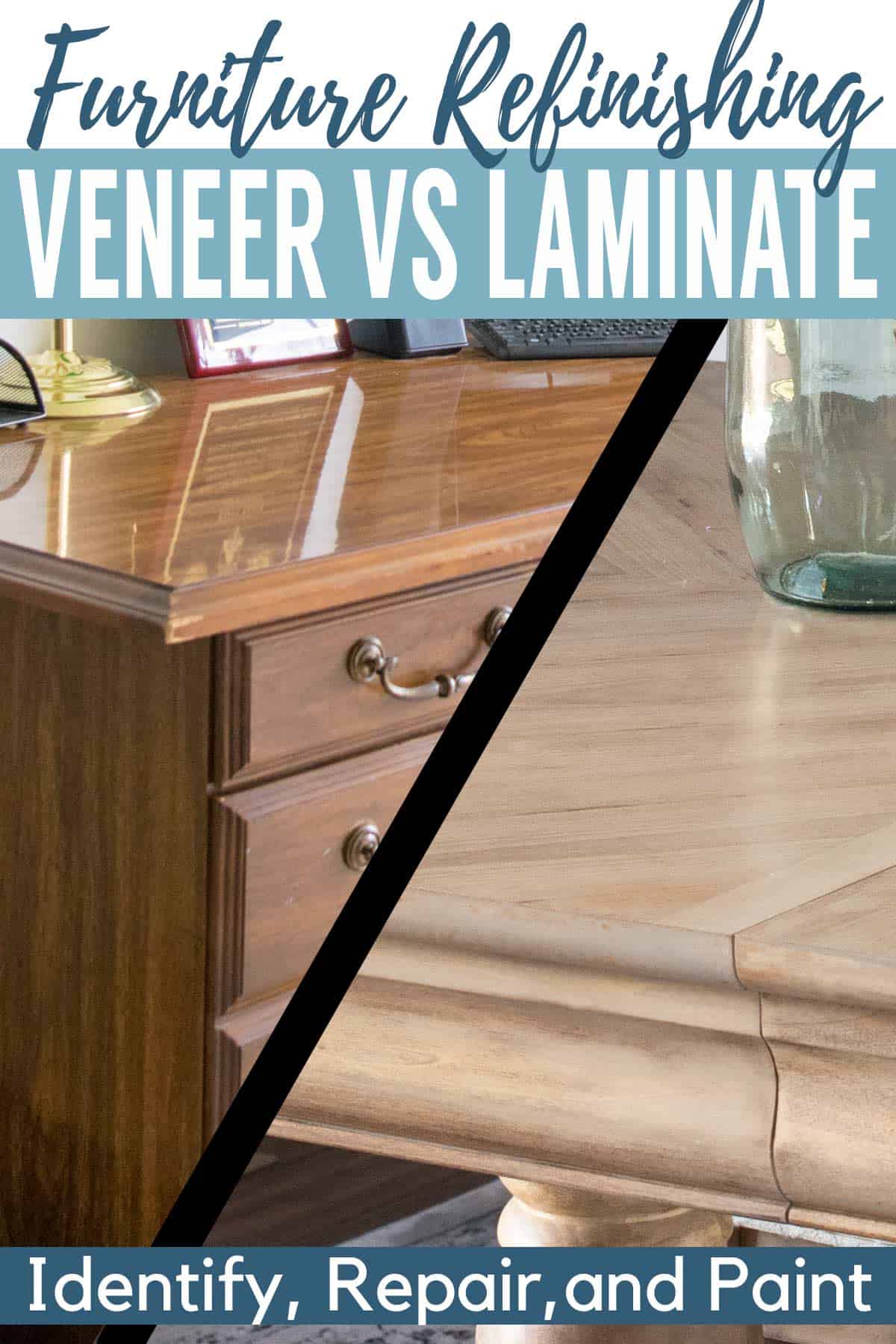
Furniture transformations are so much fun! It’s incredibly satisfying to bring pieces back to life as seen in our dining room table and entertainment center transformations. The project becomes even more special when a piece of furniture has sentimental value attached like my husband’s masculine desk makeover.
If you’ve tried your hand at painting furniture or refinishing furniture, you’ve probably come across a laminate or veneer surface. The landscape of furniture manufacturing has changed vastly throughout the decades. Hardwood supply decreases paired with rising costs, have caused wood veneers to surge in use.
This handy guide helps you identify each type of surface to master professional grade paint results with every project.
Difference Between Veneer and Laminate Furniture
Laminate and veneer are used to cover the same core substrate materials such as plywood, MDF or particle board. The difference? Laminate consists of layers of paper or plastic resin; wood veneer is a thin slice of natural wood.
Pro Tip: When refinishing a piece of furniture, prepare to treat multiple surface types. A laminate tabletop is often cleverly disguised with decorative edges or moldings made of solid wood. For example, this desk has solid wood drawers and edges, a Formica top, and printed laminate sides.
About Veneer
Veneer is a thin layer of hardwood that’s adhered to a lesser quality wood surface. The thickness of this decorative layer can vary quite a bit.
Types
Veneer is sourced from real wood so options will include high-quality hardwood such as cherry, maple, walnut, or exotics like zebrawood or purpleheart wood. The veneer can be over all kinds of materials including chipboard, mdf, particle board, or in layers like plywood.
Uses
Wood veneer doesn’t warp or expand as easily as solid wood and it will be a cheaper material to work with, particularly if you can use smaller pieces to make a design. It’s more structurally sound which makes it highly useful for things like table tops or large slabs. Unlike laminate, you get all of the realism and graining of real wood.
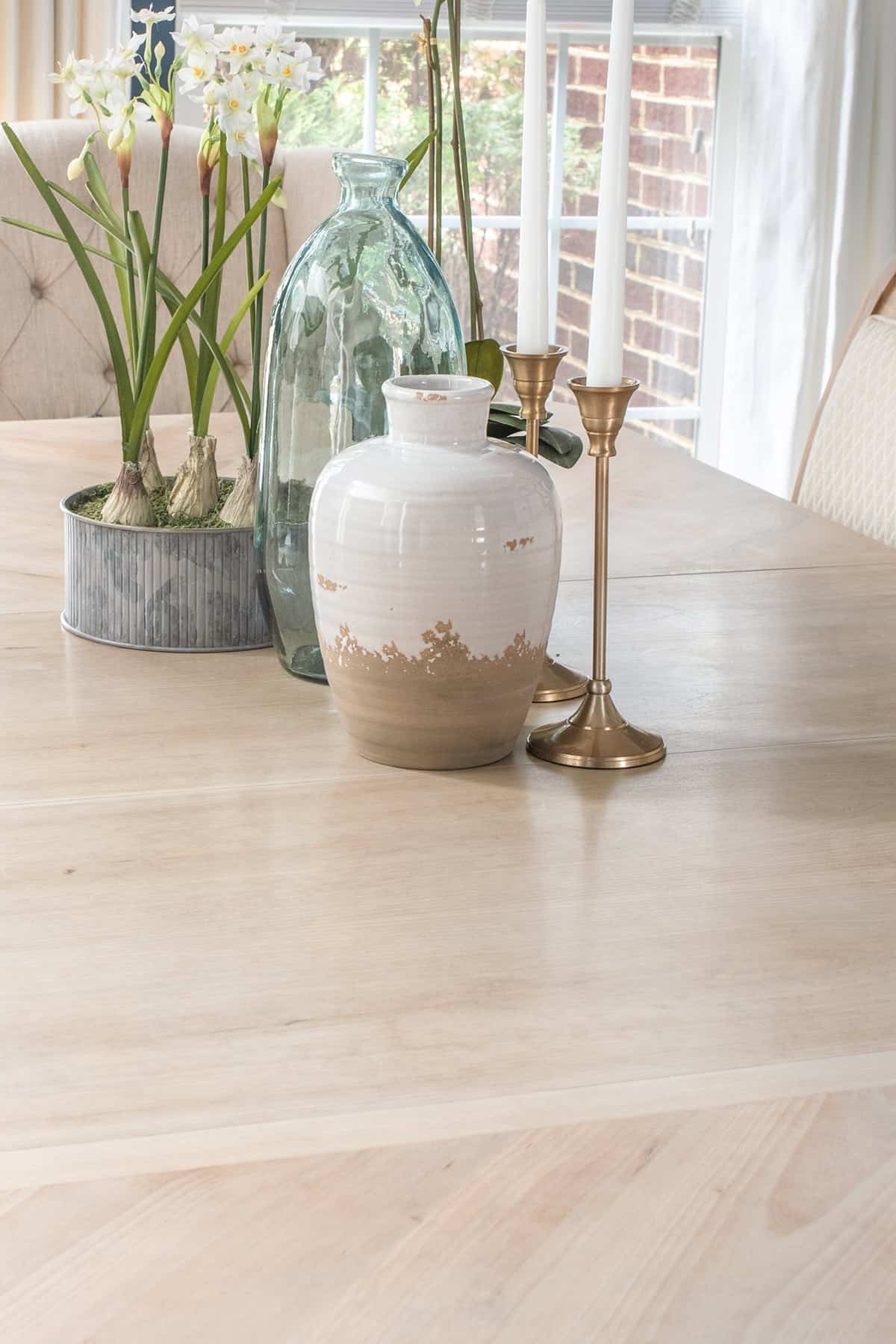
The table below, which I refinished and used in this post on bleaching furniture is a veneered surface.
About Laminate
Laminate is a fabricated material constructed of paper or plastic that’s bonded to a base. It’s a cost-effective material that can withstand everyday wear & tear from heat, stains, and sometimes scratches.
Types
Thermofoil is a plastic material which is wrapped and formed to the profile of an underlying composite wood core. It can be peeled off and is similar to plastic vinyl sheeting. Although most commonly featured on cabinets like these, it does get used by some furniture manufacturers, such as IKEA.
Melamine is a low-pressure laminate. Comparable to laminate countertops, it’s traditionally applied over a chipboard substrate. I installed shelves in my laundry room that are melamine.
Printed Laminate is a glossy paper-like covering that’s usually printed in a matching motif. This is a hallmark of builder grade cabinets. Wood-grained patterned material is often utilized to finish cabinetry sides.
Uses
Laminates are generally built for specific uses. In some cases, laminate is applied to provide a new property such as an antibacterial or flame-retardant finish. They tend to be extremely durable, waterproof, and resistant to stains and heat when used for things like kitchen cabinets.
Laminates are prone to chipping and cracks. Unlike veneer, laminate cannot be repaired without a labor-intensive process. Therefore, you tend to see it more often in the more cheaply built end of furniture pricing.
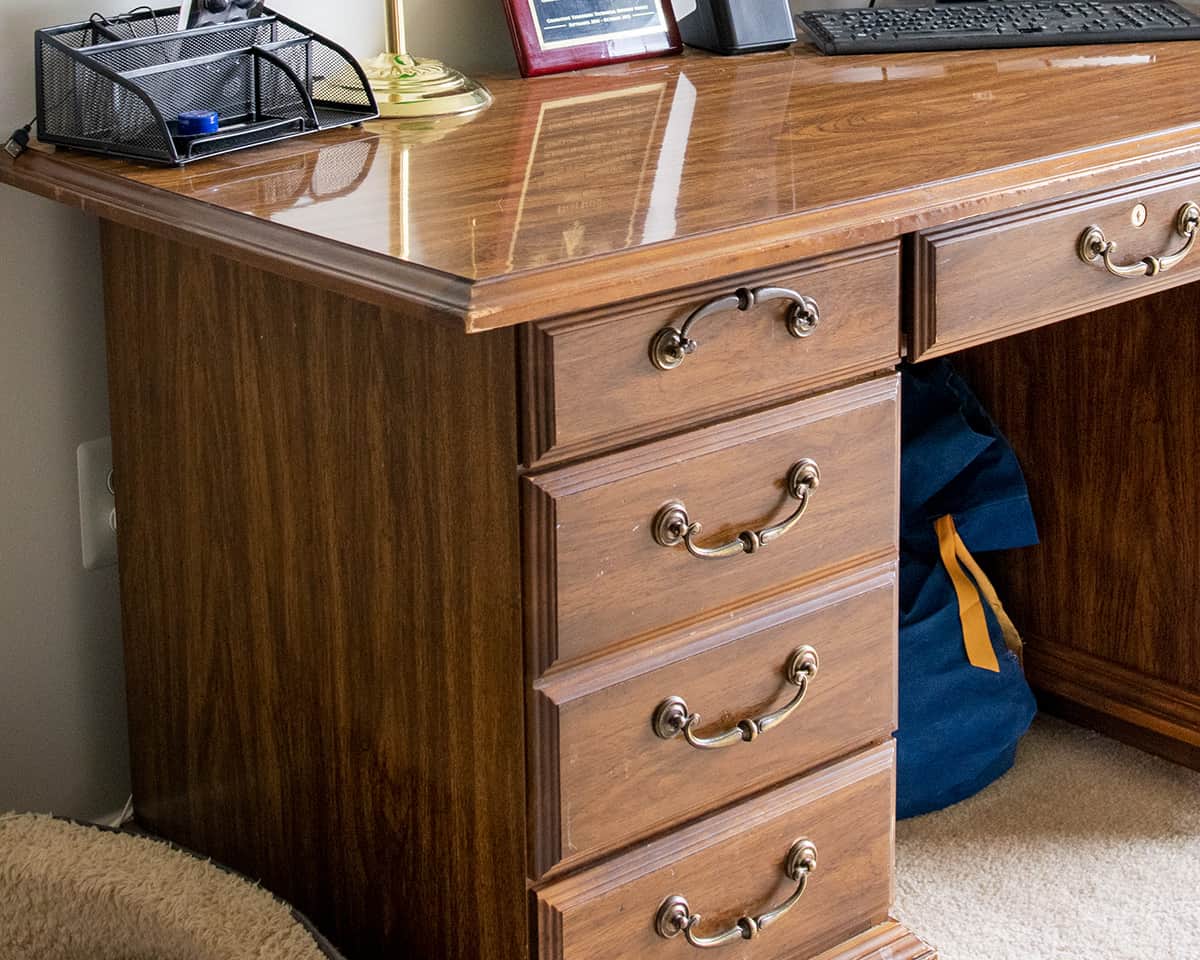
The desk above is a collection of different surfaces, including printed laminate sides and rear, solid wood drawer fronts and decorative molding, as well as an extremely durable plastic laminated top.
How Do I Paint or Stain Tricky Surfaces?
Painting Veneer: If the veneer is in good condition and isn't chipping… you can sand, prime, and paint/stain as you would with any piece of furniture. The trick is to gauge your pressure. Don’t sand so rough that you break through the top layer.
If the veneer is damaged or chipped, but it’s not flaky… fill it with wood-putty and sand it smooth. Check out this stunning painted DIY dresser before and after for more details.
IF it’s flaky and loose…remove it. Lay a damp towel (but not sopping wet) over the entire veneer for a few hours. The steam will help loosen water based adhesives. Then apply some heat through the towel with a heat gun or even a good iron. When just cool enough to touch, pry the veneer up gently with a metal paint scraper.
Painting Laminate: Painting laminate varies based on the type of laminate surface you’re working with. Read my comprehensive guide on painting laminate furniture for more information.
How to Identify Surfaces
Laminate or Veneer can be tricky to identify because the finishes are made to closely mimic natural materials like wood or marble. There are a few ways to discern the difference.
- By touch. Laminates aren’t wood based, so they won’t feel like real wood.
- By sound. It may sound different. If you tap on it with your fingernail, laminate may make a plasticky-sounding noise.
- Check the pattern. Closely inspect the wood grain surface at an angle. Does the grain line up with the printed pattern? You may note material wrapped around the edges of a drawer, but no end grain that would present with solid wood material.
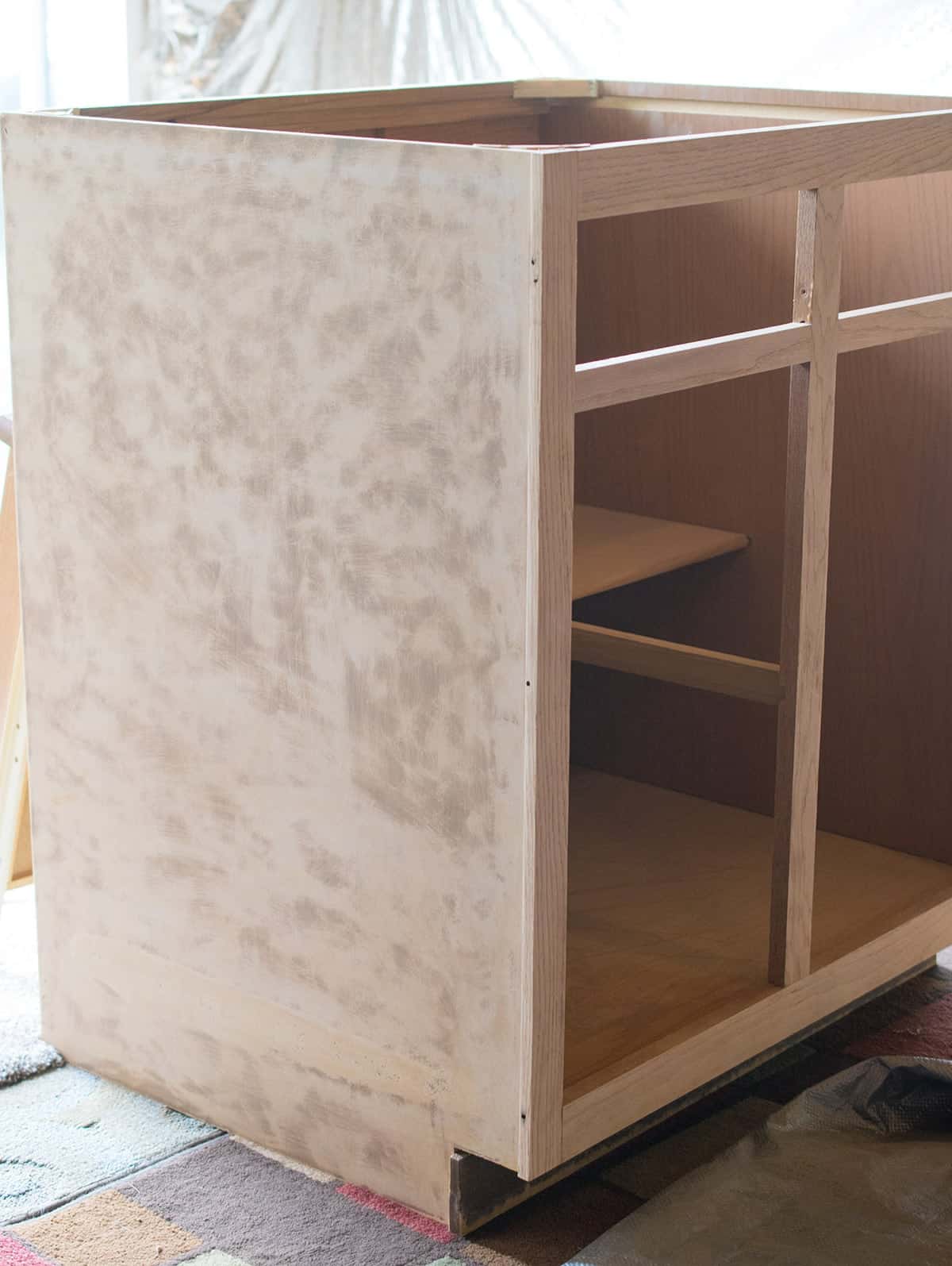
- Large surfaces. It’s actually rare to find a solid large surface of wood. Take, for example, the sides of our entertainment center. They’re 20 inches by 7 feet. They’re plywood veneers, but I didn’t need to look to know they wouldn’t be solid wood. It’s not as structurally stable nor cost-effective for furniture companies to use slabs of wood in that manner.
- Look at edges and inside surfaces. To cut costs, areas that aren’t seen are often left naked so you can see the construction materials. These areas include the inside of drawers, the backs of dressers, or even underneath the item. Even if it’s stained dark, you can sometimes see that the wood takes up the stain differently.
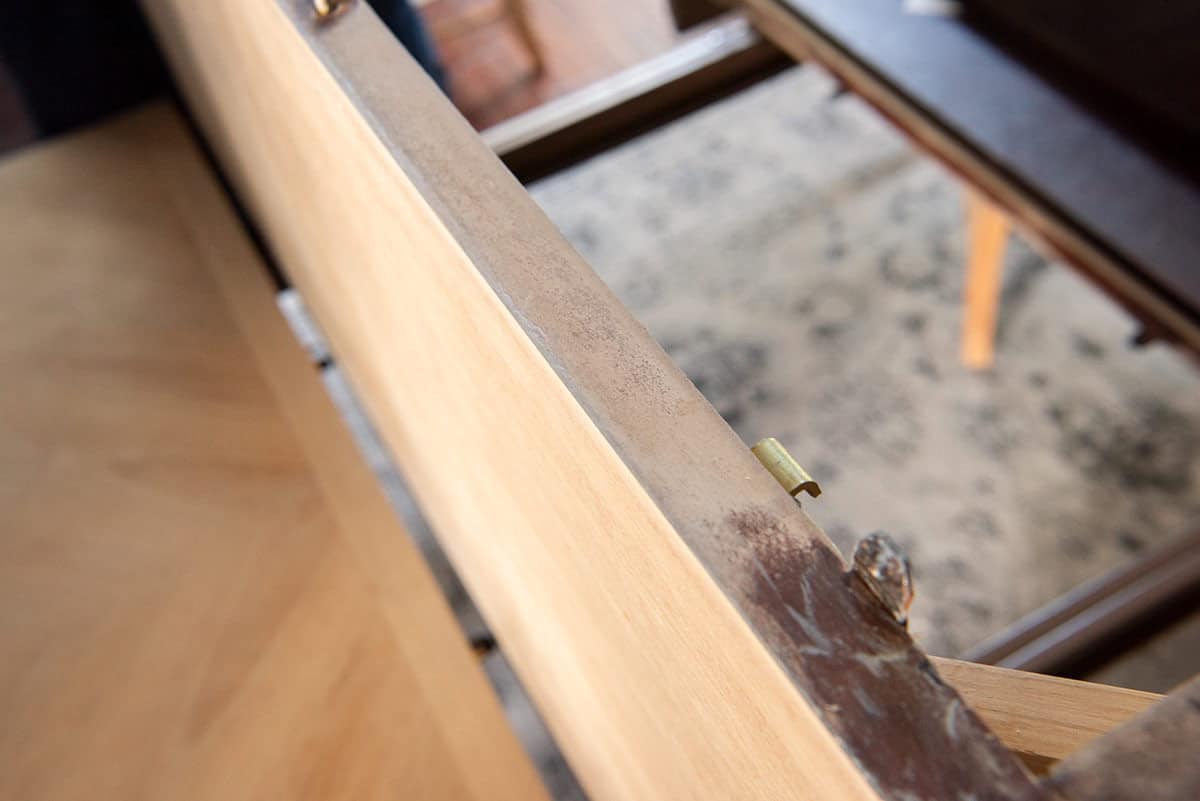
Our dining room table has a veneer tabletop. The most obvious indicator? The bottom side of the table is a different wood type than the top side.
Other indicators included the absence of matching grain pattern around the surface edge of the table. In addition, you can see where the glue seeped out in the photo above.
These are all great points of reference when you’re assessing a piece of furniture. Keep in mind though that you’ll probably find more than one surface to work with.
Grab our free series "Weekend Home Projects that will Transform Your Life" Sign up below to receive updates including free printables, organization tips, home improvement projects, recipes and more! |
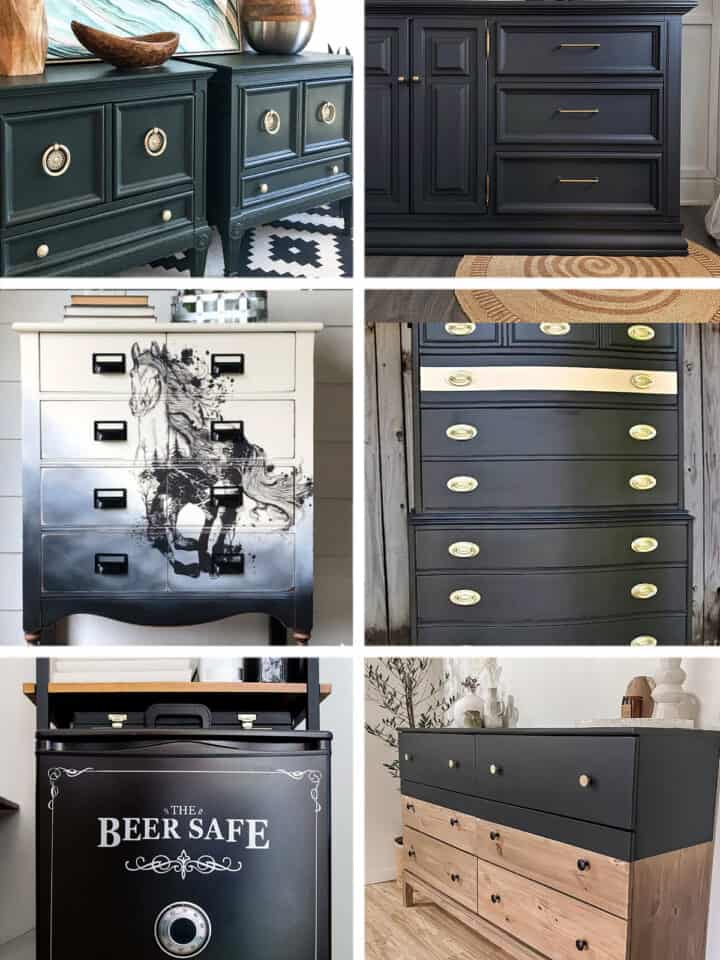
More Furniture Makeovers

PS I love seeing your creations! Be sure to take a photo and tag #cravingcreative on Instagram! You can also stay in touch with me through following me on Instagram, Pinterest, and subscribing to the newsletter!
Ceola Main says
some really prime articles on this website , bookmarked.